

A curated guide to the designers building something new.
The swimwear category has always had a visibility problem. For decades, the brands that dominated it, the ones with the ad budgets and the wholesale accounts and the magazine covers, told a narrow version of what a woman at the water looked like. The designers who saw that gap most clearly, and built into it most deliberately, were often the ones the industry was slowest to recognize.
That is changing. Not because the industry had a sudden reckoning, but because a generation of Black founders built brands compelling enough that ignoring them became impossible. The work came first. The recognition followed.
What follows is a curated selection of Black-owned swimwear brands worth knowing: their founding vision, their design signature, and what they have contributed to a category that is richer for their presence. This is not an exhaustive list. It is a considered one.
The Brands
Andrea Iyamah
Andrea Iyamah is the closest thing the category has to a blueprint for how heritage storytelling becomes brand identity. The Nigerian designer's collections draw directly from West African art, pattern, and color theory, translated into swimwear and resort wear that reads as genuinely original rather than referential. Her draping and ruching are technically accomplished in a way that distinguishes the work from trend-driven peers. Stocked at Revolve and Saks Fifth Avenue, with a New York flagship, her trajectory is the one every serious independent swimwear founder studies.
Asherah Swim
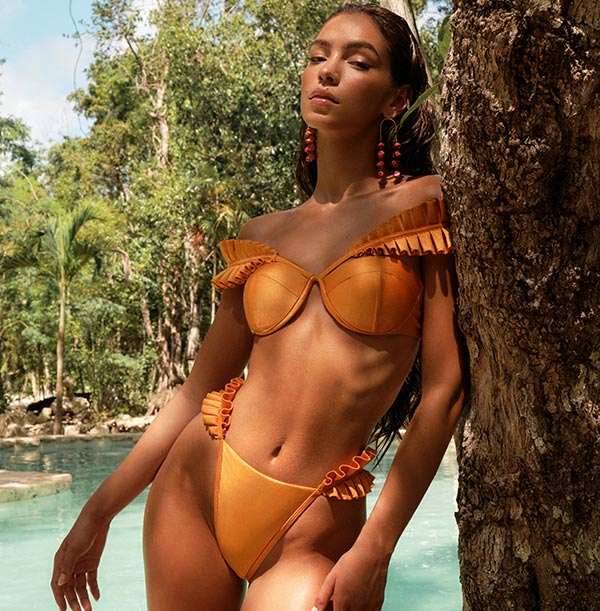
Asherah is the founder-forward model in practice. Creative director Cheryl Cejae Jones built the brand around a specific visual signature: bold color, confident cuts, prints that are unapologetically referential to the Black experience and the diasporic aesthetic it carries into the water. The brand has developed a loyal following among women who want swimwear that does not soften itself for a broader market. The work is specific and the specificity is the point.

BFYNE
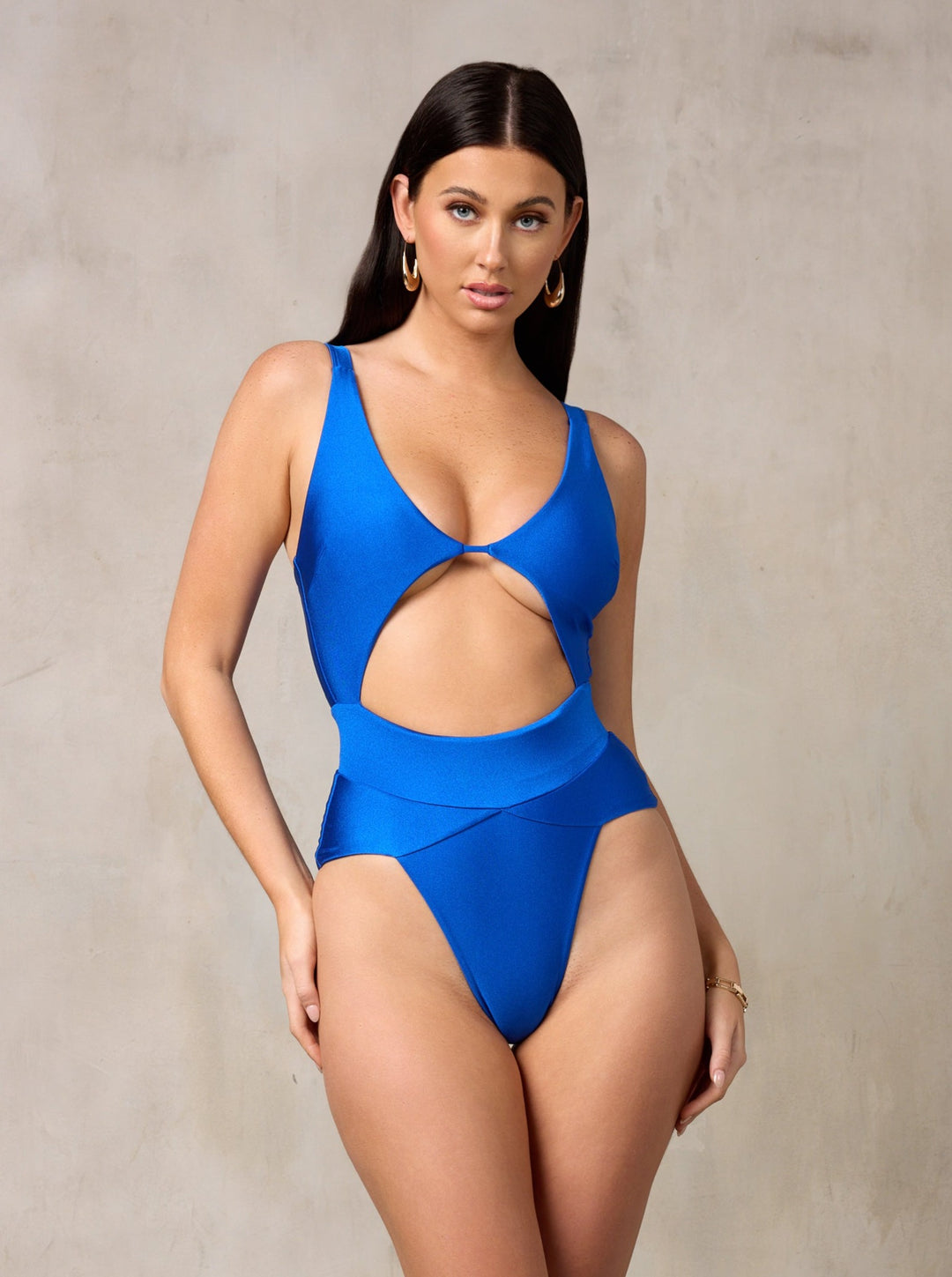
Buki Ade's brand occupies the space between fashion week and the beach without apology. The silhouettes are dramatic, the prints are bold, the cutouts are considered rather than reflexive. BFYNE has appeared in Sports Illustrated Swimsuit and been worn by Hunter McGrady, and carries the energy of a brand that is building toward something larger than a seasonal swimwear collection. The Afro-futurist visual vocabulary is consistent across collections in a way that signals genuine design conviction.

Chéri House
Chéri House produces a single piece: the Sandra Monokini, a deep-V high-leg one-piece with custom-engraved 24K gold-dipped hardware and Xtra Life Lycra fabric, available in five destination-inspired colorways. The brand's founder, Moneifa Nance, is FIT-trained with Trinidadian heritage, and the Caribbean identity that no other premium swimwear brand has claimed is becoming increasingly central to the brand's narrative. The Sandra retails at $195, manufactured in Brazil by a women-owned factory, designed in New York. The brand's thesis is that a swimsuit can be as considered as any other designed object. The five colorways, Cape Coast, Santorini, St. Barts, Bahia, and Tahiti, each trace a destination that the Sandra woman already knows or is planning to find.

Jade Swim
Brittany Kozerski left a senior editorial position at Marie Claire to found Jade Swim, and the former fashion editor's eye is evident in the work. The brand occupies the minimalist, sustainable end of the premium swimwear market: clean lines, considered fabrication, pieces designed to work as hard out of the water as in it. Entry price at $195 places it alongside the most considered names in the category. Jade Swim is proof that founder credibility, built through editorial expertise rather than celebrity, opens press doors consistently.
MBM Swim
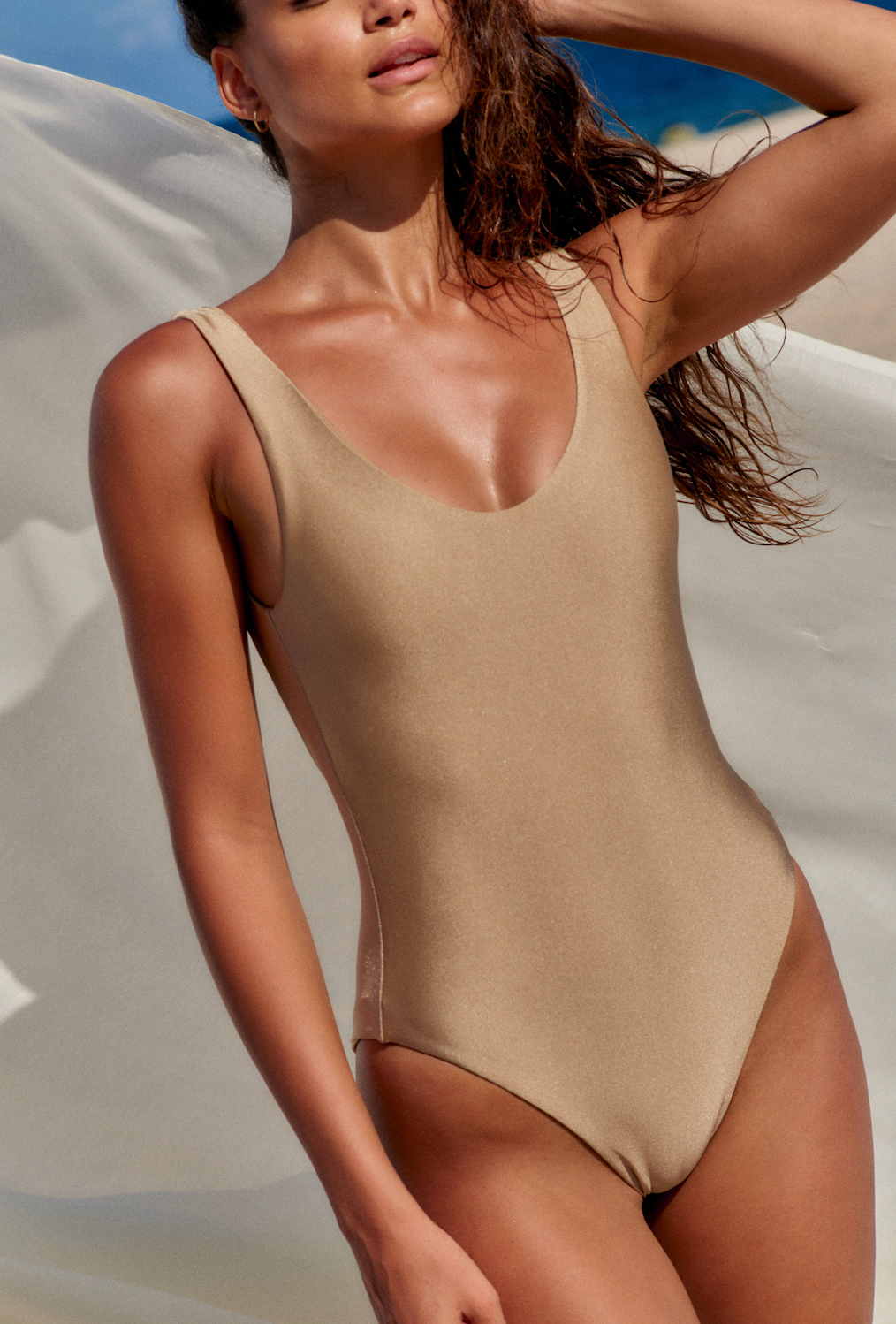
Marcia B. Maxwell is a self-taught designer whose work contradicts every assumption that phrase carries. MBM Swim's defining quality is structure: suits that hold their shape and their silhouette with the precision of ready-to-wear rather than the forgiving stretch of most swimwear. The brand has cultivated a following among women who want their swimsuit to do what a well-tailored dress does, to impose a shape rather than merely accommodate one. The work is disciplined and the aesthetic is consistent.
Nomads Swimwear
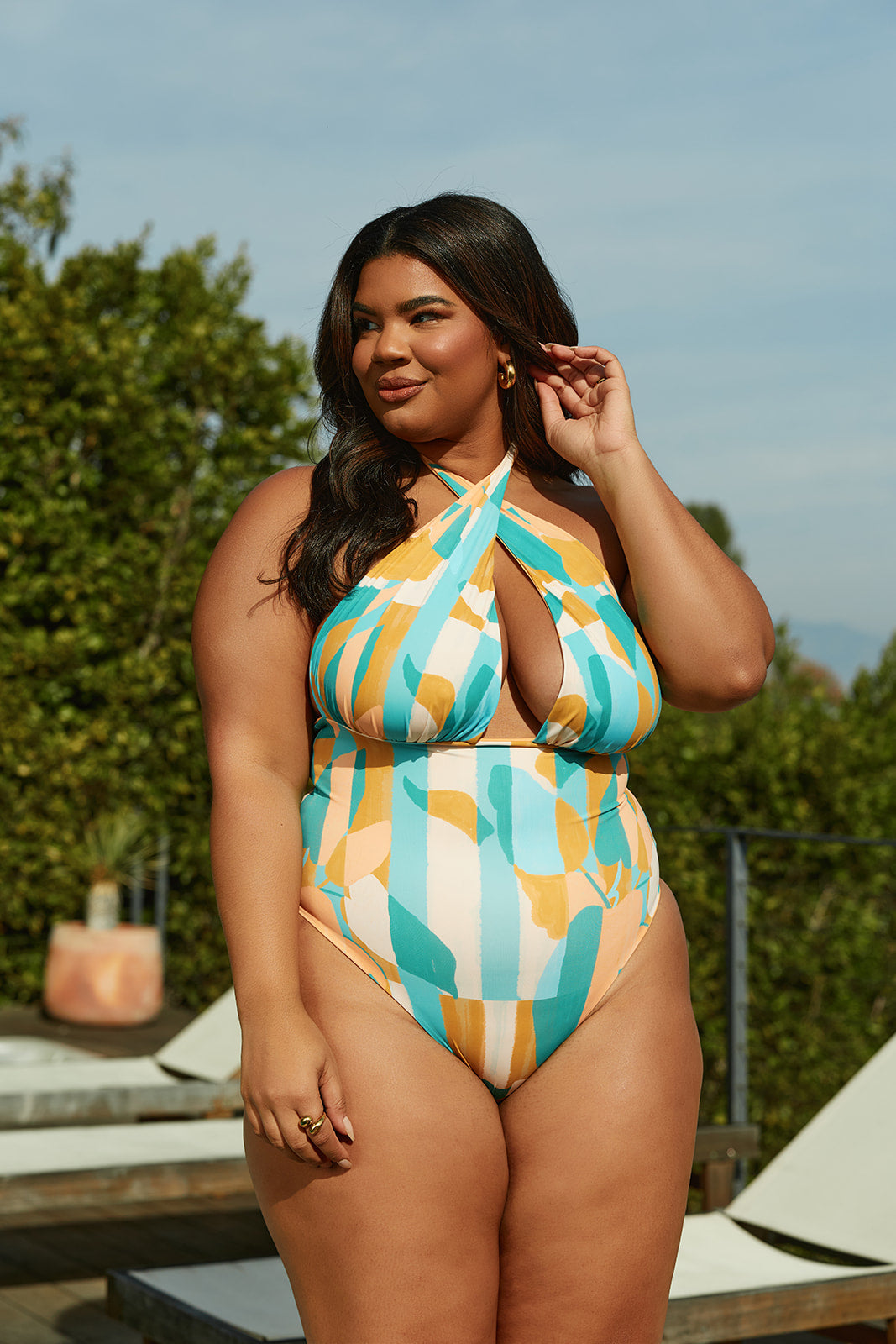
Taylor Long founded Nomads with a specific mandate: that size-inclusive swimwear should not look different from its straight-size counterparts, that the design concessions typically made for extended sizing are concessions in design thinking rather than structural necessity. The brand runs XS to 5X in every style, uses biodegradable and compostable fabrics, and has appeared in Sports Illustrated Swimsuit on plus-size model Hunter McGrady. Nomads makes the case that the most interesting work in sustainable swimwear is also the most inclusive.
Riot Swim
Riot Swim launched as a line of elevated basics and has grown into one of the most consistently referenced Black-owned swimwear brands in the premium market. The brand's silhouettes are body-conscious without being reductive about it, the fabrication is notably considered, and the color palette runs from natural tones to bold without losing coherence across collections. Riot has been worn by a breadth of Sports Illustrated Swimsuit models, a signal of the industry's recognition that the brand belongs at that table.
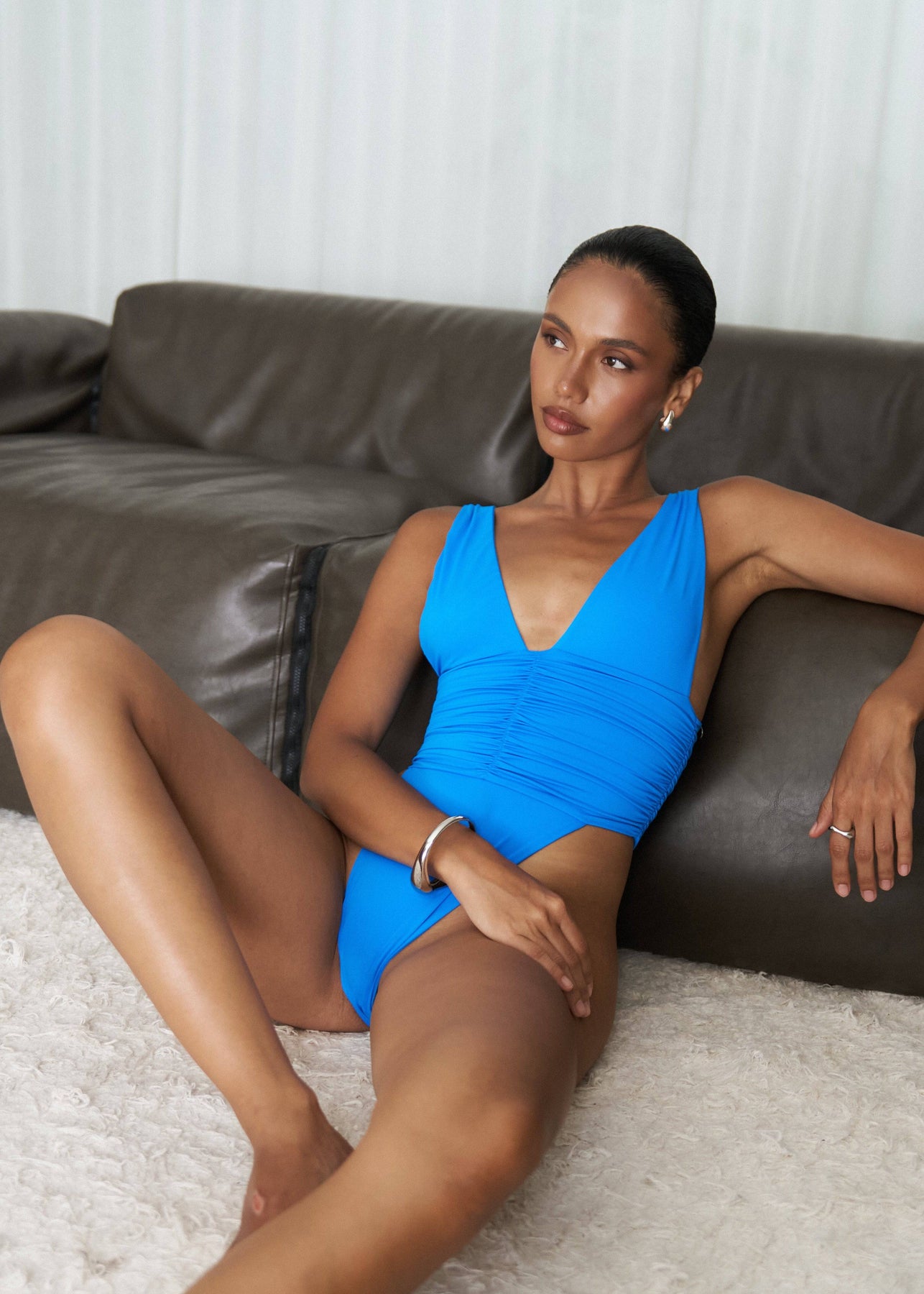
These brands are not the whole of Black-owned swimwear. They are representative of the range: heritage storytelling, craft-forward minimalism, size-inclusivity as design principle, sustainability as founding thesis, founder visibility as brand identity. What they share is intention. Each was built by someone who knew what was missing and decided to build it themselves.
That, more than any single design signature, is what they have contributed to the category.
Frequently Asked Questions
What are the best Black-owned swimwear brands?
The answer depends on what you are looking for. For heritage storytelling and bold prints rooted in African design, Andrea Iyamah and BFYNE are the strongest references. For premium minimalism, Jade Swim. For size-inclusive sustainable swimwear, Nomads Swimwear. For structured, architectural silhouettes, MBM Swim. For a single statement piece with Caribbean design heritage and 24K gold hardware, Chéri House.
Are Black-owned swimwear brands available at major retailers?
Several are. Andrea Iyamah is stocked at Revolve and Saks Fifth Avenue. Jade Swim is available through major premium retailers. Riot Swim and BFYNE have broad distribution through online channels and have appeared in Sports Illustrated Swimsuit. Others, including Chéri House and MBM Swim, sell direct-to-consumer, which allows for tighter quality control and a more direct relationship with the customer.
What price range do Black-owned swimwear brands cover?
The full range. Riot Swim bottoms begin around $50. Matte Collection offers accessible pricing under $100. Jade Swim and Chéri House sit at the $195 entry point, consistent with premium swimwear. Andrea Iyamah ranges from $170 to $237 and above. BFYNE pieces run from $73 into the hundreds for statement pieces. The category is not a monolith, and the breadth of pricing reflects a genuine diversity of positioning.
Is Chéri House a Black-owned swimwear brand?
Yes. Chéri House is founded and designed by Moneifa Nance, a New York-based designer of Caribbean and Trinidadian heritage. The brand produces the Sandra Monokini, a single-style swimwear piece available in five destination-inspired colorways, retailing at $195. It is manufactured in Brazil by a women-owned factory and designed in New York.
cherihouse.com | @cherihouseswim | House Magazine | 2026